Benign Eye Tumours

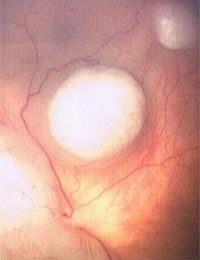
Although many types of ocular tumours are benign, they do not cause any less worry for the sufferer until they have been given an official diagnosis and have successfully had complete and necessary treatment.
The actual term tumour does not automatically refer to cancerous growths as many people may assume. The term actually refers to all growths of tissue whether they are cancer or not; when they are not cancerous they are called benign tumours. That said, it should not be assumed that all benign growths will do no harm as the cells that are contained within the tumour could change at any time.
There are several types of benign eye tumours, some more common in children than adults whilst others are seen more often in adults.
Benign eye tumours in children include:
- Dermoid cysts. Dermoid cysts are cyst-like growths that develop in the bone.
- Intraocular choroidal hemangiomas. This term relates to growths that develop from blood vessels.
In adults:
- Lymphangiomas. These are tumours that grow as a result of excessive lymphatic vessels.
- Arteriovenous. The most common and fairly self explanatory, these growths develop as there is more than a usual amount of blood vessels that have knitted and amassed together.
- Schwannoma. Not so obvious, a schwannoma is a growth made up of nerve cells.
- Lipoma. A lipoma is fairly common and is made up of fatty tissues that mass together giving a fairly soft and moveable mass.
- Mucocoele. A mucocoele is not exactly a tumour of the eye as it arises from a growth in the sinuses, but as it grows it can infringe on the eye area.
Although these types of tumours may be benign in their early stages it is possible for them to experience cellular changes over time.
Benign tumours can often cause the same symptoms as malignancies which can include but are not limited to; watery eyes, discomfort in the eye area, bulging of the eye, visual disturbances, blurred vision, loss of sight and a noticeable growth.Many forms of eye tumours will be biopsied to make sure they are non-malignant and this will often determine the nature of treatment planned for the future.
In some cases the tumour will be removed where possible whether this is for relief of symptoms, to prevent cell changes or because of cosmetic reasons.
Your doctor may decide however, especially in the case of a hemangioma, that there is no need for active treatment just yet as the risk of the tumour turning malignant is extremely small. In this case you may simply be monitored and the growth measured at regular intervals to assess whether it is growing and at what rate. If however the growth begins to infringe on other parts of the anatomy, it may need treatment, but this is merely preventative and not because you have cancer.
Tumours of the eye may be malignant but equally, they can be altogether less sinister. If you have any symptoms of the eye at all, please see your optician or doctor who will examine your eye with the aim of detecting any abnormalities which can then be assessed and treated if necessary.
Business Energy With a Difference
If you are looking for business energy or need advanced solutions like remote energy monitoring, new supplies, downgrading or upgrading capacity, have a no obligation chat with Purely Energy.
To find our more get in touch here. or call 0161 521 3400.